

He was standing in the canned goods aisle, studying the back of a soup label like it held the answer to something important. It might have. When I introduced myself and mentioned I write about government benefits, Vernon Matsuda let out a short, dry laugh and said, “You might want to pull up a chair.” We ended up talking for nearly two hours, first in the store, then at a coffee counter two blocks away.
Vernon is 49, a petroleum engineer who has spent more than two decades working on energy infrastructure projects across the Gulf Coast. He lives in Miami’s Brickell neighborhood with his 7-year-old son, Elias, and has been a single parent since his divorce finalized in early 2024. His ex-partner provides no financial support. Until October 2025, he earned a solid upper-middle-class income — roughly $118,000 a year — and considered himself financially careful.
Then a fall on a platform job site outside of Port Sulphur, Louisiana changed everything.
The Injury Nobody Would Own
Vernon described the accident with the precision you’d expect from an engineer. On October 14, 2025, he slipped on an improperly secured access grate during a routine inspection, falling approximately six feet and landing on his left side. He suffered a herniated disc at L4-L5, a fractured rib, and nerve damage that has affected the feeling in his left leg ever since.
He filed a workers’ compensation claim within 48 hours, as required. His employer’s insurance carrier denied the claim on November 6, 2025 — less than four weeks later — citing what they called “evidence of a pre-existing spinal condition” identified in a 2019 MRI that had been part of a routine physical. Vernon says that MRI showed minor disc narrowing that had never caused him a single symptom.
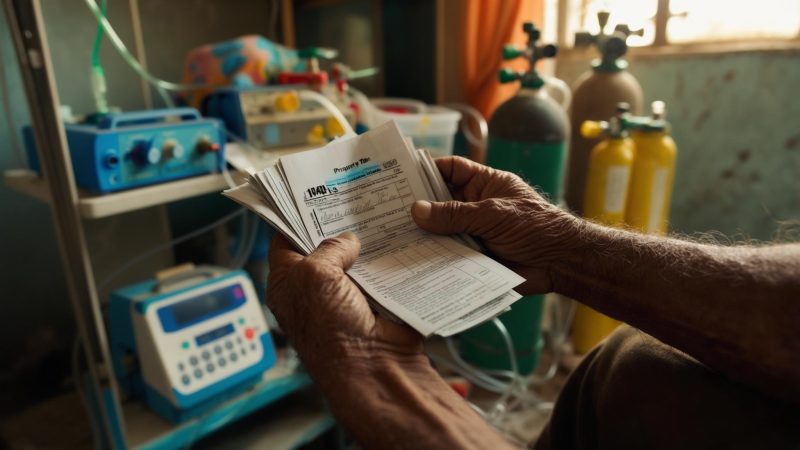
Without that workers’ comp income, and unable to return to his physically demanding job while recovering, Vernon burned through his emergency fund in about six weeks. By January 2026, he was $14,200 in credit card debt — most of it from out-of-pocket medical bills his employer’s insurance wouldn’t cover. His property tax bill on his Brickell condo sat $8,400 delinquent. He was still waiting on an attorney to take his workers’ comp appeal.
Why He Looked at Social Security — and What He Found
Most people associate Social Security with retirement. Vernon did too. But as he explained it to me, a coworker mentioned Social Security Disability Insurance — SSDI — during a phone call in late November, and Vernon spent the next two weekends researching whether he might qualify.
SSDI is a federal program administered by the Social Security Administration that pays monthly benefits to workers who can no longer perform substantial gainful activity due to a medically documented disability. Eligibility is tied to your work history — specifically, how many “work credits” you’ve accumulated through years of paying Social Security payroll taxes.
Vernon had more than enough work credits — 23 years of paying into the system gave him that. The harder question was whether his injury met the SSA’s definition of a qualifying disability. The SSA requires that a condition prevent any substantial gainful activity and be expected to last at least 12 months or result in death. As Vernon explained, a herniated disc and nerve damage don’t automatically clear that bar.
“I’m an engineer. I can work a desk. The SSA knows that too,” he told me, not with resignation, but with the flat clarity of someone who has done his reading. “But I can’t stand for more than twenty minutes right now. Sitting for long periods causes shooting pain down my leg. So I hired a disability attorney on contingency and filed in December.”
The Waiting, and What It Costs a Family
When I spoke with Vernon in early April 2026, his SSDI application was still pending — roughly four months in, with no initial decision yet. The SSA’s own data, published on SSA.gov, shows average processing times for initial SSDI decisions have stretched to between five and seven months in recent years, with many cases requiring reconsideration or a hearing before an administrative law judge.
What struck me most when Vernon described his daily life was the gap between how he presented himself — composed, measured, almost professional in recounting the sequence of events — and what the numbers revealed underneath. He’d reduced Elias’s aftercare program from five days a week to two. He’d paused his life insurance premium. He was cooking in bulk on Sundays to avoid wasting food.
He’d also looked into whether Elias might qualify for any auxiliary benefits if Vernon’s SSDI claim were approved. According to the SSA’s disability benefits page, dependent children under 18 can receive up to 50% of a parent’s SSDI benefit amount, subject to a family maximum. For Vernon, whose estimated SSDI payment would be approximately $2,840 per month based on his earnings record, that could mean an additional $1,420 monthly for Elias — a meaningful number.
The Parts the System Doesn’t Cover
There is a particular kind of exhaustion that comes from falling through the seams of multiple systems at once. Vernon faced a denied workers’ comp claim, a pending SSDI application, delinquent property taxes, and mounting credit card interest — and none of those systems speak to each other or provide coordinated relief.
He’d called Miami-Dade County’s property tax office in February and been told he could apply for a hardship deferral, but the process required documentation his workers’ comp appeal attorney still had. He’d contacted a nonprofit credit counselor about his $14,200 in card debt. Progress, but slow.
In March, Vernon managed to pick up approximately $2,200 worth of remote consulting work — reviewing technical documents for a former colleague’s firm. It was below the SSA’s Substantial Gainful Activity threshold of $1,550 per month in 2025 (adjusted for 2026), so it shouldn’t jeopardize his SSDI application. But he’d checked and double-checked that figure with his attorney before taking a single project.
“I don’t want to do anything that looks like I’m gaming it,” he told me. “I’m not gaming anything. I’m just trying to make sure my kid can stay in his school.”
Where Things Stand — and What Vernon Hopes For
When I asked Vernon what he wished he’d known before any of this happened, he didn’t hesitate. He said he’d assumed workers’ compensation and Social Security were redundant — that if one failed, the other would cover the gap automatically. They don’t work that way. They are separate systems with separate criteria, separate timelines, and no coordination mechanism for someone caught between a denied private claim and a pending federal one.
His SSDI application is likely to face an initial denial — statistically, the majority do, regardless of merit. His attorney has already prepared him for reconsideration and possibly an administrative law judge hearing, which can add another 12 to 24 months to the process. If approved retroactively to December 2025, he could receive back pay covering the waiting period beyond five months — potentially a lump sum of several thousand dollars.
That possibility is real, but not guaranteed, and not soon. Vernon Matsuda is a man holding two timelines in tension: the one where his application is approved and he can stabilize, and the one where it isn’t and he figures out the next step after that. He’s made peace with both possibilities in the way only quiet, determined people manage to.
When we parted ways outside that coffee counter on a Tuesday afternoon in early April, he mentioned he was going to pick up Elias from school and they were planning to make pasta together that night. He said it the way you say something that matters more than it sounds. I believed him completely.
Sloane Avery Wren is a Senior Benefits Writer at Benefit Beat covering Social Security, Medicare, and federal assistance programs. This article is reported journalism and does not constitute financial, legal, or benefits advice. Readers with disability claims should consult a licensed Social Security attorney or accredited claims agent.
Related: He Fell on the Job at 61, Got Denied Workers’ Comp, Then Discovered His Identity Had Been Stolen
Related: At 54 With No Retirement Savings, He Finally Opened His Social Security Statement — The Projected Check Was $1,240 a Month
.pvv-faq-section details summary::-webkit-details-marker{display:none}.pvv-faq-section details summary::marker{display:none;content:””}.pvv-faq-section details[open] summary .pvv-faq-arrow{transform:rotate(90deg)}



Leave a Reply