
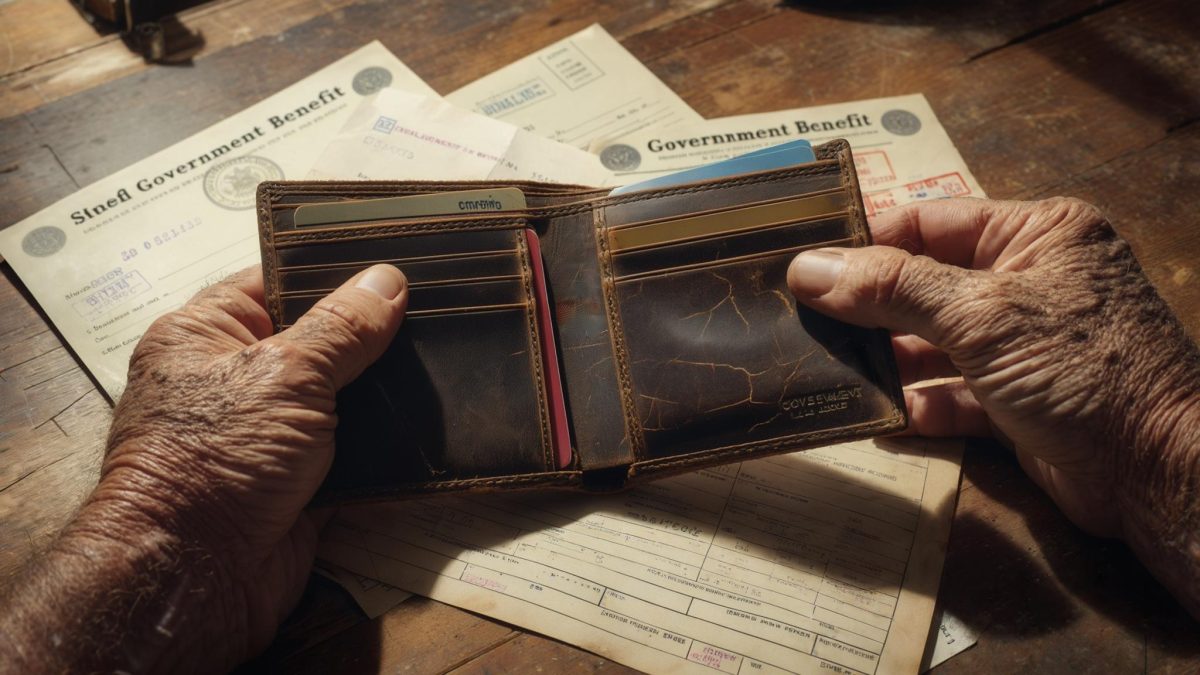
What would you do if a debt collector told you they were coming for your retirement check — and you had a six-year-old depending on that money to eat?
That’s the question Keith Thornton was sitting with when I first heard his voice crackling through a Chicago AM radio program last February. He had called into a local benefits segment, careful with his words, clearly embarrassed. He didn’t say much before the segment moved on. But something in his measured tone — the way he paused before each sentence, like he was double-checking every fact — stuck with me. I tracked him down through the station’s producer three days later.
A Retirement That Came Too Soon
When I sat down with Keith Thornton at a diner near his Logan Square apartment, he came prepared. He had a manila folder. Printed spreadsheets. Highlighted bank statements. At 47, he didn’t look like someone in financial crisis — he looked like someone trying very hard to manage one.
Keith had worked for the United States Postal Service for 22 years before a degenerative disc condition forced him into medical retirement in late 2024. He receives a modest federal retirement annuity through the Federal Employees Retirement System (FERS), and began receiving Social Security Disability Insurance (SSDI) benefits after a waiting period. Combined, his monthly income sits around $3,100 — which sounds comfortable until you factor in Chicago rent, a six-year-old’s childcare costs, and what happened to his 2014 Honda Civic last November.
“The transmission went,” he told me flatly. “Mechanic said $2,800 minimum. I put it on a card I’d already used for an ER visit in September. Now that card is at $9,400 and they’ve sent it to collections.”
His ex-partner provides no financial support. Keith has sole custody of their son, Darius, and he described the weight of that responsibility with the kind of quiet intensity that only comes from someone who has run the numbers at 2 a.m. more times than he can count.
The Letter That Triggered the Panic
In January 2025, Keith received a notice from the collections agency stating they intended to pursue a bank account levy. He told me he spent three days reading everything he could find online — and most of what he read made him more afraid, not less.
“I didn’t know if they could take my SSDI deposit. I didn’t know if my FERS annuity was different from Social Security. I was reading forums at midnight while Darius was asleep, and I genuinely didn’t know if I was going to be okay.”
What Keith eventually found — through SSA.gov and a legal aid clinic he contacted in February — was that Social Security benefits carry significant federal protections against most private creditors. Under Section 207 of the Social Security Act, SSDI and retirement benefits are generally exempt from garnishment by commercial debt collectors. Credit card companies, medical billing collectors, and most private creditors cannot legally seize those funds.
The Protection — And Its Limits
The legal aid attorney Keith met with, a volunteer at a Chicago nonprofit clinic, walked him through the nuances. The protection is real, but it isn’t automatic in every situation. There are critical exceptions.
- Federal tax debt: The IRS can garnish Social Security benefits — up to 15% of each payment.
- Child support or alimony: Court-ordered family support obligations can reach benefits.
- Federal student loans: The Department of Education can garnish up to 15% of benefits for defaulted loans.
- Private creditors: Generally cannot touch Social Security or SSDI — but must be stopped actively if they attempt a bank levy.
There’s also a banking rule that matters: when Social Security is direct deposited, banks are required to automatically protect at least two months’ worth of benefit deposits from levy — a protection established under federal Treasury rules finalized in 2011. Keith had his SSDI deposited directly, which meant his bank was already obligated to shield that amount.
What Actually Changed — and What Didn’t
Keith filed a written exemption claim with his bank in March 2025 after the collections agency attempted to place a hold on his account. The hold was released within ten business days. The $9,400 debt, however, remained.
His FERS annuity exists in a somewhat different category — federal retirement pay has its own set of protections and exceptions, which his legal aid contact helped him parse separately. Keith is currently negotiating a settlement on the credit card debt with the collector, aiming for a lump-sum resolution of roughly $4,500, money he’s been setting aside over several months.
The car remains parked. Keith takes the bus with Darius to school drop-off most mornings, which adds about 40 minutes to his day. He described it without complaint, but when I asked whether he resented the situation, he paused the longest pause of our conversation.
“I don’t do resentment. It takes too much energy I don’t have. I do research. I do spreadsheets. I figure out what’s true and what I can actually do.” He tapped the manila folder. “That’s in here.”
What Keith’s Story Reflects About Benefits and Debt
Keith’s situation is more common than most people assume. According to the SSA’s disability program statistics, millions of Americans receive SSDI — and many carry consumer debt accumulated before or during disability. The intersection of benefit income and debt collection is a documented pressure point, and legal aid organizations across the country report it as one of their most frequent inquiry categories.
What distinguishes Keith isn’t his circumstances — it’s his approach. He didn’t wait for things to resolve. He called a radio show. He cold-called a legal clinic. He printed the bank’s exemption claim form and filed it himself. The outcome wasn’t perfect, but it was informed.
“The hardest part,” he told me as we wrapped up, “wasn’t the debt. It was not knowing what was true. Once I knew the actual rules, I could work with them. Uncertainty is the expensive thing.”
He’s right. And for a lot of people navigating federal benefits amid financial hardship, that uncertainty is exactly where the damage happens — not from the law itself, but from not knowing what the law actually says.
Related: A High School Math Teacher Ran the Numbers on Social Security — What He Found Kept Him Up at Night
Related: He Was Counting on His April 15 Social Security Check to Cover Doubled Insurance Premiums — Then His Ex’s Debt Hit




Leave a Reply