
Roughly 8.4 million Americans receive Social Security Disability Insurance, according to the Social Security Administration — yet many of them describe their first payment cycle as one of the most bewildering experiences of the entire application process. For Andre Jennings, a 39-year-old daycare center owner from Cleveland, Ohio, that confusion arrived at the worst possible moment.
I first came across Andre through a comment he left on a previous Benefit Beat article about SSDI processing timelines. His comment was raw and specific — he mentioned COBRA premiums, an old garnishment threat, and a payment date that never seemed to come. I reached out directly, and he agreed to talk.
When I sat down with Andre over a video call on a Tuesday afternoon in late March, his daycare was running in the background — the sound of children and a staff member managing drop-off audible beneath our conversation. He looked tired in the specific way that financial stress produces: not sleepy, but worn down.
A Business Built on Borrowed Time
Andre opened his daycare, Bright Steps Learning Center, in 2019 using $34,000 in graduate school loans he had taken out while pursuing a master’s in early childhood education. The center struggled through the pandemic, and by 2022 he was carrying roughly $61,000 in total student loan debt with income that had never fully recovered.
Then, in the fall of 2023, he was diagnosed with a degenerative spinal condition that made it increasingly difficult to stay on his feet for the long hours that running a small childcare center requires. He brought in a part-time manager, cut his own salary to near zero, and applied for SSDI in February 2024.
His COBRA health insurance — coverage he maintained after losing his group plan when the daycare stopped paying premiums — was running $1,480 a month. His share of rent in the home he split with a roommate was $850. “My insurance costs more than my housing,” Andre told me. “I kept thinking, there has to be a mistake somewhere. Nobody designs a system that works this way on purpose.”
His SSDI application was approved in January 2025 after an initial denial and a successful reconsideration — a process that took nearly eleven months. His approved monthly benefit: $1,340.
The Payment Schedule Nobody Explained
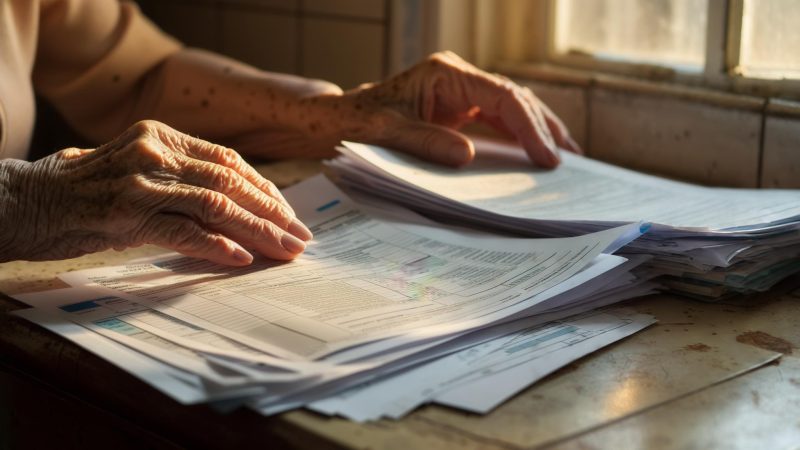
Approval, Andre quickly learned, is not the same as payment. He received his award letter in mid-January 2025 but saw no deposit in his bank account for weeks. He called the SSA twice and got different explanations each time.
What Andre had not been clearly told is that SSDI payment dates are assigned based on the beneficiary’s birthday — not the approval date, not the application date, not any administrative calendar. According to the SSA’s official benefit payment schedule, recipients are placed into one of three Wednesday payment groups each month:
- Born 1st–10th: Second Wednesday of each month (April 8 in 2026)
- Born 11th–20th: Third Wednesday of each month (April 15 in 2026)
- Born 21st–31st: Fourth Wednesday of each month (April 22 in 2026)
Andre was born on March 7. That placed him in the second-Wednesday group. His first payment arrived on the second Wednesday of February 2025 — three weeks after his award letter — with back pay for his five-month retroactive period deposited separately a few days later.
The Garnishment Fear That Kept Him Up at Night
Alongside the payment confusion came a separate threat. An old medical debt from 2021 — roughly $4,200 from an emergency room visit — had been sold to a collections agency. The agency had sent letters suggesting legal action. Andre wanted to know whether his SSDI payments could be seized.
“I did not tell my roommate how serious it had gotten,” he said. “I was embarrassed. I’m the guy who opened a business. I have a graduate degree. And I’m sitting here Googling whether the government can take my disability check before I even cash it.”
The answer, as I explained to Andre during our conversation without offering any legal opinion, is nuanced. Most private creditors cannot garnish federal Social Security benefits — the funds are generally protected under federal law once deposited in a bank account, provided the account holds only benefit funds. However, certain federal debts, including federally-held student loans and back taxes, do carry garnishment authority under specific conditions. Andre’s student loan servicer had already sent him a notice about potential administrative wage garnishment on his daycare’s business income.
Where Things Stand Now
When I spoke with Andre in late March 2026, he had been receiving SSDI payments for just over a year. His financial situation remained tight — $1,340 a month does not cover $1,480 in COBRA premiums without supplemental income — but some of the acute panic had subsided. He had connected with a nonprofit legal aid organization in Cleveland that helped him negotiate a payment plan on the medical debt and pointed him toward income-driven repayment options for his student loans.
The daycare was still operating, staffed primarily by two part-time employees. Andre took on light administrative work from home. He had also applied for Medicaid based on his income level, a step that, if approved, would make the COBRA question moot.
His frustration is not unfounded. The SSA payment structure — while logical in its design — is rarely explained proactively to new recipients. The agency’s official 2026 payment calendar is publicly available, but Andre told me he was never pointed to it during the approval process. He found it by accident while searching online three weeks after his award letter arrived.
What strikes me most about Andre’s story is not the scale of the debt or even the absurdity of health insurance costing more than rent. It is the information gap — the space between “you’re approved” and “here is exactly what happens next” — that compounds the hardship. Andre filled that gap with anxiety, phone holds, and Google searches at 2 a.m. He deserved a clearer map.
He ended our conversation with something that has stayed with me. “I’m not asking for more than what I paid into,” he said, quietly. “I just want to know when it’s coming.”


Leave a Reply