

The most common advice given to surviving spouses is to contact the Social Security Administration immediately after a loss — but almost nobody explains what happens when the benefits you are eligible for are effectively canceled by the job you need to keep the lights on. That gap between eligibility and reality is where I found Irene Hargrove.
I first heard about Irene in February 2026, through an email from a Minneapolis-based financial counselor who had been working with her for several months. “She has a story that deserves to be told,” the counselor wrote. “She did everything right by conventional standards and still fell through the cracks.” Within the week, Irene and I were on a video call, and she was speaking to me from the living room of a south Minneapolis house she now carries entirely on her own.
Irene Hargrove is 54. She is a freelance graphic designer — the kind of quiet, steady professional who built a career shaping other people’s brands while her own financial story went unwritten for years. Her husband Marcus died in October 2023, suddenly, from a cardiac event. He was 56.
When the Bills Don’t Wait for Grief
Irene described the months after Marcus died as a kind of financial freefall in slow motion. She and Marcus had purchased their home in 2018, stretching their budget to land in a neighborhood with better schools for their two children — who have since grown up and relocated to Seattle and Austin. By the time Marcus was gone, $267,000 remained on the mortgage, with a monthly payment of $1,840.
She also carried $41,500 in student loan debt from an MFA she completed in 2015, a graduate degree she pursued while Marcus was steadily employed as a civil engineer and their combined income felt stable enough to absorb the cost. “I thought the degree would open doors,” she told me. “And it did, actually. But it also followed me every month since.”
Her freelance income averages roughly $39,000 per year — enough to keep the mortgage current and manage her minimum loan payments, but not enough to build savings at any meaningful pace. After taxes, her monthly take-home runs between $2,900 and $3,100. The mortgage alone absorbs more than half of that.
For the first year after Marcus died, Irene said she ran on autopilot. She did not contact the Social Security Administration. She did not look at retirement projections. She worked, paid bills, and tried not to think too far ahead. “There was no bandwidth,” she said simply. “You’re just surviving.”
A Benefit She Didn’t Know She Had
The financial counselor who eventually connected Irene with me had flagged something she had missed entirely: Social Security survivor benefits. As a widow whose husband had a solid, decades-long work record, Irene was potentially eligible for a monthly benefit based entirely on Marcus’s earnings history — not her own.
According to the Social Security Administration, surviving spouses can begin claiming reduced survivor benefits as early as age 60 — or as early as 50 in the case of a qualifying disability. Full survivor benefits become available at full retirement age, which for Irene, born in 1971, means age 67.
Irene’s reaction when the counselor explained this to her was immediate. “I genuinely did not know that was available to me,” she told me. “Two years. I lost two years of knowing that option existed.” She paused, then added: “Nobody told me. And I didn’t know to ask.”
The option she had unknowingly been sitting on is one the SSA’s survivor benefits publication explicitly encourages: contact your local SSA office as soon as possible after a spouse’s death to understand all available benefits and your claiming options. For Irene, that two-year gap didn’t eliminate future eligibility, but it cost her planning time she could not afford to lose.
The Earnings Trap Nobody Warned Her About
The discovery of survivor benefits gave Irene a brief sense of relief — and then reality arrived. The Social Security earnings test is a provision that most people claiming benefits before full retirement age encounter without warning. For 2026, the SSA withholds $1 in benefits for every $2 earned above approximately $23,400 in annual income from work.
Irene earns roughly $39,000 per year. That places her approximately $15,600 over the current threshold. Under the earnings test, nearly $7,800 in annual survivor benefits could be withheld — effectively erasing most of what she would receive if she claimed at age 60 while continuing to work at her current income.
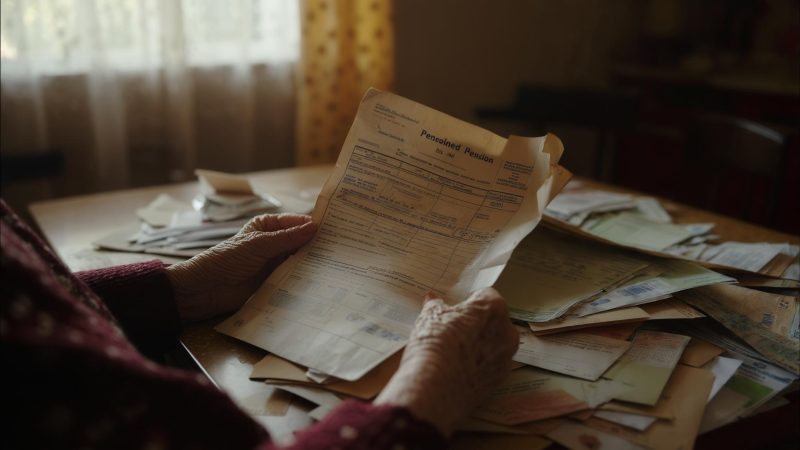
As Irene described it, her counselor laid all of this out on a single sheet of paper and slid it across the table. “He said, ‘If you claim at 60 and keep working at your current income, you’re essentially getting nothing.’ I remember feeling like the floor dropped out.” She stared at me through the screen for a moment. “I went from relieved to back at zero in about four minutes.”
Six Years, One Plan, No Guarantees
When I asked Irene what she was actually doing differently now that she understood her situation, she gave a dry laugh. “I made a list,” she said. “I make lists. It’s the designer in me.”
Her plan requires that her freelance income hold steady — and that she stays healthy enough to keep working at full capacity for the next several years. She acknowledged both of those are assumptions, not guarantees. “I’m a one-person operation,” she said. “If I can’t work, nothing works.”
There is also a secondary strategy her counselor mentioned that Irene is still processing: because she has her own Social Security earnings record from years of freelance work, she may eventually be able to claim one benefit first and switch to the other later — a coordination strategy that, if timed correctly, can increase lifetime income. According to the SSA’s retirement planner, the interaction between survivor and retirement benefits is one of the more nuanced areas of the program, and the optimal approach depends heavily on individual earnings records and health projections.
What Irene’s Story Leaves Behind
Closing my laptop after our conversation, I kept returning to one phrase Irene used: “I didn’t know to ask.” She is fiercely capable. She runs a business, raised two children largely without help, and held her household together through a grief that would have derailed a lot of people. But competence in life does not automatically produce knowledge of a system as layered as Social Security.
Her outcome, for now, is genuinely mixed. She has a clearer picture than she had two years ago. She has a counselor helping her map the terrain. But she is still 54, still carrying a combined $308,500 in debt, still freelancing alone in that south Minneapolis living room, and still six years away from the earliest point where a survivor benefit would make any practical difference to her monthly reality.
“I’m not where I thought I’d be at this age,” she told me near the end of our conversation. “But I’m also not done. That’s something.”
It is something. And for the millions of widowed Americans navigating this same terrain without a financial counselor to flag what they’re missing, Irene’s story is a sharp reminder: the gap between being eligible for a Social Security benefit and knowing you are eligible can cost years of planning time that can’t be recovered.



Leave a Reply