

The night I first heard Nolan Hargrove’s name, I was standing near a cooler at a block party in East Knoxville, half-listening to a neighbor recount how the guy three houses down had gotten hurt at work, been denied workers’ comp, and somehow clawed his way back from $34,000 in credit card debt. I tracked Nolan down the following week, and he agreed to sit with me at his kitchen table on a Tuesday morning in late February 2026.
He poured two cups of coffee and set them down without asking if I wanted any. That told me something about him before he said a single word.
The Injury That Started Everything
Nolan Hargrove is 47, a long-haul truck driver who has worked the I-40 corridor out of Knoxville for nearly two decades. He earns a solid living — roughly $78,000 a year before taxes — and has always considered himself financially careful. He pays child support for two kids, ages 11 and 14, handles his own rent, and carries no mortgage. Until the spring of 2024, he had almost no debt.
Then, in April of that year, a pallet shifted on a loading dock outside Memphis and caught him at an awkward angle. He felt the pop in his lower back immediately. An MRI later confirmed two herniated discs at L4-L5.
His employer’s workers’ comp insurer denied his claim in June 2024, arguing the injury was a pre-existing condition. Nolan hired an attorney and began an appeals process that was still unresolved when we spoke. In the meantime, he burned through his savings covering physical therapy co-pays, a second MRI, and three months of reduced driving while he recovered enough to get back behind the wheel.
By December 2024, Nolan had accumulated $34,200 in credit card debt spread across three cards. He had not missed a child support payment — he was emphatic about that — but he had deferred his own dental care, dropped his gym membership, and eaten through a $9,000 emergency fund he spent years building.
What the my Social Security Account Revealed
The turning point, Nolan told me, was not a lawyer or a hotline. It was a free online account he almost didn’t bother creating.
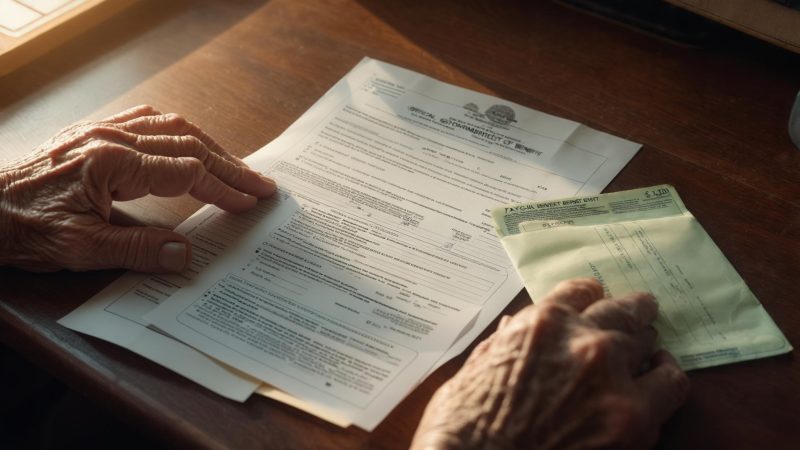
A coworker mentioned the SSA’s my Social Security portal in passing during a break-room conversation in October 2024. Nolan had heard of it vaguely, the way most people have, but assumed it was only useful for retirees. He went home that night, set up an account in about fifteen minutes, and pulled up his full earnings record for the first time in his life.
According to TheStreet’s coverage of the milestone, the Social Security Administration surpassed 100 million registered my Social Security accounts in early 2026, with SSA Commissioner Frank Bisignano noting that Americans want “immediate access to service, 24 hours a day.” For Nolan, what that access surfaced was concrete and useful: a personalized SSDI benefit estimate based on his actual work history.
He had paid into Social Security for 22 consecutive years. His estimated monthly SSDI benefit, displayed right there in his account dashboard, was approximately $2,140. That number sat with him.
The SSDI Question — and Why It’s Complicated
Knowing a number exists and qualifying for a benefit are two very different things, and Nolan understands that clearly. He returned to driving in July 2024 — modified routes, shorter hauls — and has not stopped working. That matters enormously for SSDI eligibility, which requires demonstrating an inability to engage in substantial gainful activity.
What the account did, Nolan explained, was shift his mental framework. Instead of feeling like a man whose options had been taken away by an insurance company, he began to see himself as someone with a documented work history and federally recorded contributions. Whether or not SSDI ever becomes part of his story, that reframe was real.
A Small Win That Feels Fragile
By the time we sat down together in February 2026, Nolan had paid down roughly $11,000 of his credit card debt. He refinanced two of the three cards through a credit union loan at a lower interest rate — dropping his average APR from 24.7% to 11.2% — and picked up additional weekend runs for a regional carrier that contracts independently. His monthly debt payment dropped from $1,100 to about $640.
It is a real improvement. But Nolan did not describe it as a victory. He described it as a foothold.
The workers’ comp appeal was still pending as of our conversation. His attorney told him a hearing could come as late as the third quarter of 2026. If the appeal succeeds, back pay could cover most of his remaining debt. If it doesn’t, he said, he will reassess.
What Nolan Wants Other Workers to Know
I asked Nolan what he would tell a coworker who had never looked at their Social Security record. He answered without hesitation.
His point connects to a broader shift the SSA has been pushing. According to the SSA’s official announcement in February 2026, more than 100 million Americans have now registered my Social Security accounts — a milestone the agency described as reflecting demand for round-the-clock self-service access. The portal allows users to view their full earnings history, check estimated benefits at various claiming ages, and manage direct deposit or address changes without visiting a field office.
For a 47-year-old truck driver navigating a denied workers’ comp claim alone in a Knoxville apartment, that kind of access was not a convenience. It was the first solid ground he had found in months.
When I left his house that Tuesday morning, Nolan walked me to the door and mentioned he had a short run to Chattanooga that afternoon. He said it matter-of-factly, not with pride or complaint. He was going back to work because that is what he does. The fear underneath it — that one wrong lift could restart everything — he carries quietly. But he knows now what he has contributed, what the record says, and what the system might owe him if the worst happens. That, he told me, is not nothing.



Leave a Reply