
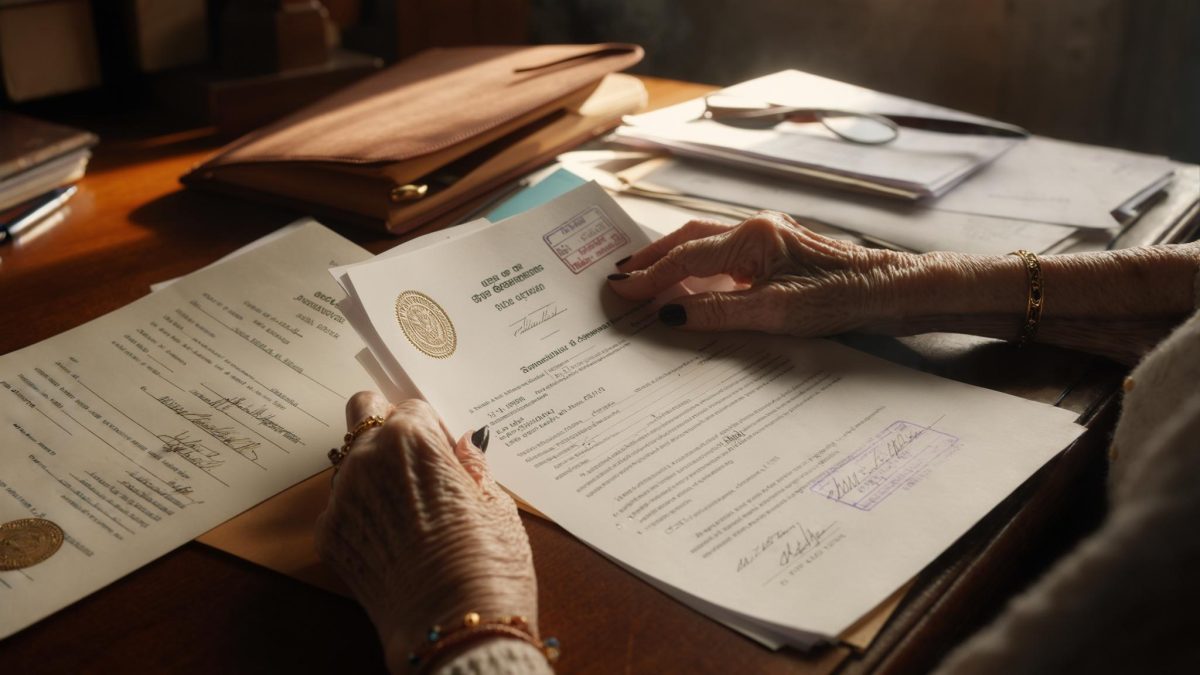
What would it mean to you if the government had the wrong version of your entire working life on file — and you had no idea? That question sat with me long after a social worker at the Denver County assistance office pulled me aside and said, simply, “You need to talk to Gladys.”
I met Gladys Peralta on a Tuesday morning in late February 2026, in the break room of Denver Fire Station 18. She was still in her uniform jacket, having just come off a shift. She poured coffee without offering any, set it down in front of her, and looked at me with the flat, tired eyes of someone who has been explaining a complicated problem to unhelpful people for too long.
Gladys is 55 years old. She has been a firefighter with Denver Fire for 27 years. She earns roughly $88,000 a year — a salary that, by most measures, would suggest financial stability. She also runs a small side business, a home safety consulting service she launched in 2019 to supplement her income and, as she told me, “give myself something to build.” That business brought in about $34,000 in 2021. By 2025, it was generating closer to $11,000. She is raising a six-year-old daughter alone, with no financial support from her former partner.
She is not, in the conventional sense, struggling to survive. But she is carrying the kind of compounding stress that doesn’t announce itself with a dramatic crisis — it just grinds.
The Discovery That Changed Everything
The identity theft started, as it often does, quietly. In March 2024, Gladys applied to refinance her home mortgage and was denied. Her credit score had dropped from 741 to 588 in under two years. When she pulled her credit report, she found accounts she had never opened — a personal loan in her name taken out in Tucson, Arizona, a retail credit card with a $4,200 balance, and an address on file in El Paso she had never lived at.
She filed a police report and began the grinding work of disputing accounts. But it was her sister, a paralegal in Colorado Springs, who suggested she also check her Social Security online account. What Gladys found there was worse than the credit mess.
Her Social Security Statement showed earnings from an employer in Phoenix, Arizona — a commercial cleaning company — for tax years 2022 and 2023. Gladys had never worked in Phoenix. She had never worked in commercial cleaning. Someone had been working under her Social Security number, and those wages had been attached to her earnings history.
The phantom wages — approximately $19,400 in reported earnings across those two years — weren’t dramatically inflating her benefit projection. But they were wrong. And Gladys understood, even without anyone explaining it to her, that wrong data in a government record is not a small problem.
How Social Security Earnings Errors Actually Work
To understand why this mattered, it helps to know how Social Security retirement benefits are calculated. According to the Social Security Administration, your benefit is based on your 35 highest-earning years, adjusted for inflation. Errors in your earnings record — whether they inflate it or deflate it — can affect your projected monthly benefit at retirement.
In Gladys’s case, the phantom wages appeared to be from a low-wage job. Because she had 27 years of strong firefighter earnings, those entries didn’t dramatically change her projected benefit number. But that near-miss is almost beside the point.
The deeper issue, as Gladys explained it to me, was that she had spent 27 years trusting that the record being kept of her work life was accurate. The discovery that it wasn’t — that someone else’s labor had been attached to her name without her knowledge — shook something fundamental.
The Process of Correcting the Record — and Why It Isn’t Simple
Gladys filed a report with the SSA’s Office of the Inspector General in April 2024 and submitted a Form SS-5 to begin the identity verification process. She also contacted the IRS Identity Protection Specialized Unit, which assigned her an Identity Protection PIN for future tax filings. What she did not expect was how long the correction process would take.
As of our conversation in February 2026, the phantom wages from the 2022 tax year had been flagged and removed from her record. The 2023 entry was still under review — roughly 22 months after she first reported it.
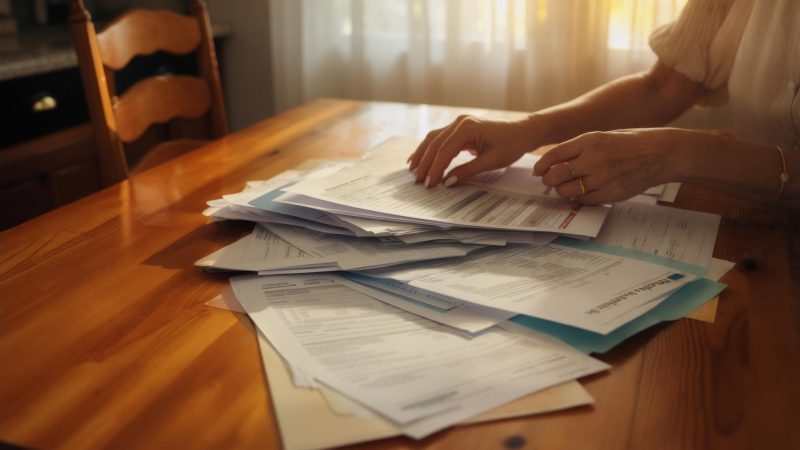
The process Gladys went through involved multiple agencies and required her to gather documentation most people don’t keep readily at hand. When I asked her to walk me through it, she ticked off the steps from memory — the kind of memory you develop when you’ve repeated something to too many phone representatives.
What the Business Decline Added to the Weight
The identity theft story doesn’t exist in isolation. Gladys launched her home safety consulting business — advising homeowners and small landlords on fire safety compliance — in January 2019. For a while, it worked. She earned $28,000 in 2020, $34,000 in 2021. She had two part-time contractors helping her by mid-2022.
Then things shifted. Post-pandemic construction slowdowns hit her landlord clients. Insurance costs for her consulting operation rose sharply. And when her credit was damaged by the identity theft, a small business line of credit she had been counting on to cover slow months was suddenly unavailable.
By the end of 2025, the consulting business brought in $11,200. She kept it running, she said, partly out of pride and partly because she isn’t ready to say it’s over. But the self-employment income she had planned to use for retirement contributions outside her pension had effectively dried up.
For someone 12 years from full retirement age, the compounding of these setbacks — the credit damage, the SSA record dispute, the business decline — has created a financial picture that looks stable from the outside and feels precarious from within.
Where Things Stand Now
One of the two phantom wage entries has been corrected. Gladys’s credit score, as of January 2026, has recovered to 661 — still below where it was before the theft, but no longer blocking her from basic financial products. The mortgage refinance she wanted in 2024 is something she says she’ll try again later this year.
Her daughter, she told me, doesn’t know any of this is happening. That matters to Gladys more than anything else I asked her about.
The social worker who connected me with Gladys — who asked not to be named — told me that Gladys’s case is more common than most people realize. High-income earners with strong credit histories, she said, are often slower to discover SSN misuse precisely because they’re not checking those accounts regularly. They assume things are fine. For a while, they are.
Gladys walked me to my car when our conversation ended. She had another shift starting at 6 a.m. the next morning. She said she wasn’t optimistic about a fast resolution on the remaining SSA dispute, but she had stopped expecting fast. “I just keep showing up,” she said. “That’s really all I know how to do.”
There was nothing triumphal about it. It wasn’t defeat either. It was the particular resilience of someone who has absorbed too many unexpected hits to spend energy being surprised by them — a firefighter’s temperament applied to the paperwork of her own financial life.
The meeting ended. She went back inside. I drove back through Denver thinking about how many people are carrying versions of this same invisible weight — not because they did anything wrong, but because someone else did, and the systems meant to protect them are slower than the damage.


Leave a Reply