
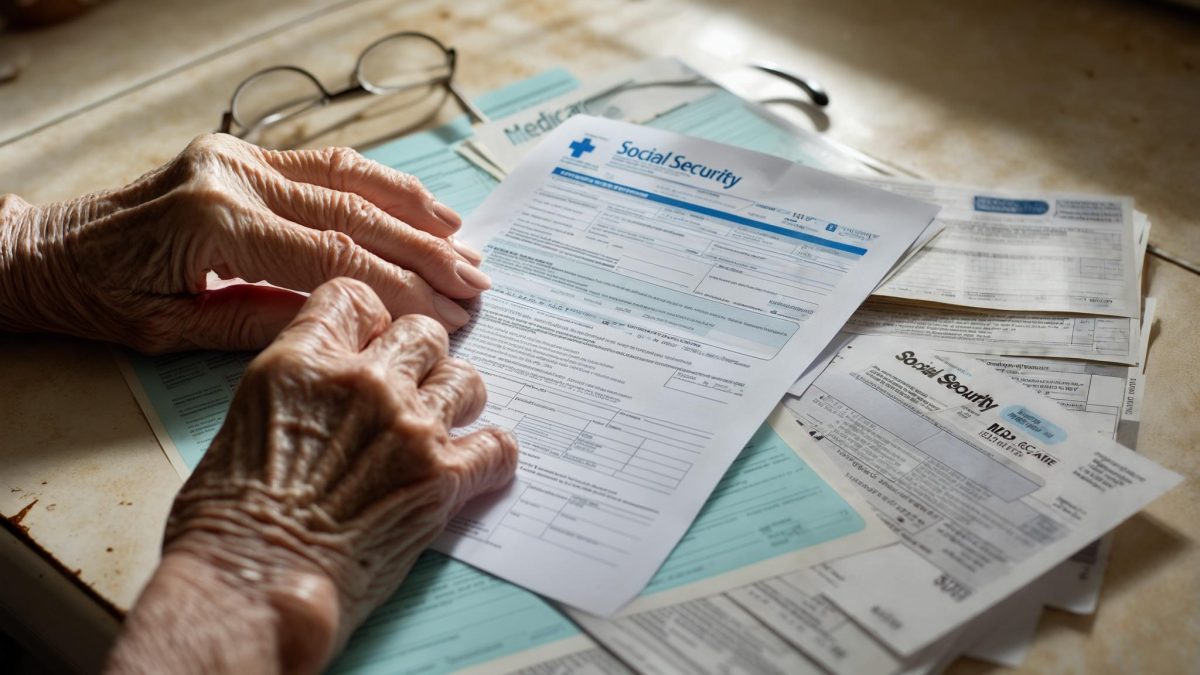
Have you ever watched your Social Security statement show a bigger number — only to open your bank account and find the deposit barely moved? That gap between the COLA headline and your actual take-home benefit is one of the most quietly frustrating realities of retirement. And it catches people off guard every single year.
I started digging into this after a reader named Carol, 71, from rural Ohio, emailed me in January. She had been told her 2025 cost-of-living adjustment was 2.5 percent. On a monthly benefit of roughly $1,800, she expected to see about $45 more each month. What she actually saw: an increase of just $14. She thought she had been underpaid. She had not been. Medicare had simply moved in before she did.
How the COLA Works — and Where It Goes Before You See It
The Social Security Administration calculates the annual cost-of-living adjustment using the Consumer Price Index for Urban Wage Earners and Clerical Workers, known as CPI-W. When inflation runs hot, the COLA rises. When inflation cools, the COLA shrinks. The 2025 COLA came in at 2.5 percent — meaningful, but modest compared to the 8.7 percent spike retirees saw in 2023.
What many people do not fully absorb is that the COLA applies to your gross Social Security benefit — not to your net deposit. If you are enrolled in Medicare Part B, those premiums are deducted directly from your monthly check. So when premiums rise alongside inflation, a portion of your COLA effectively gets rerouted to Medicare before you ever touch it.
In 2024, the standard Medicare Part B premium was $174.70 per month. In 2025, it jumped to $185.00 — an increase of $10.30. For Carol, that $10.30 per month eaten by Medicare directly offset most of the $45 she expected from her 2.5 percent COLA. The math does not lie, and it does not soften the blow.
According to the Social Security Administration’s 2025 COLA fact sheet, the average monthly retirement benefit increased from approximately $1,927 to $1,976 after the adjustment. But after the Medicare deduction, the typical net gain was closer to $39 per month — not the $48 the raw percentage would suggest.
The “Hold Harmless” Rule — Who It Protects and Who It Does Not
There is a federal protection called the “hold harmless” provision, and for some retirees it is a genuine lifesaver. Under this rule, if a Medicare Part B premium increase would cause your net Social Security benefit to go down year over year, the premium increase is capped to prevent that from happening. In plain terms: Medicare cannot take more from your check than the COLA put in.
That sounds reassuring. But hold harmless only applies in years when the Medicare premium increase would actually wipe out the COLA entirely. In years like 2025, when the COLA is 2.5 percent and the premium increase is modest, most recipients do not qualify for hold harmless protection — they simply absorb the premium hike out of their COLA proceeds.
Higher-income retirees face an additional layer called IRMAA — the Income-Related Monthly Adjustment Amount. If your modified adjusted gross income from two years prior exceeds certain thresholds, you pay more for Part B and Part D. In 2025, individuals with income above $106,000 and couples above $212,000 began paying IRMAA surcharges. These surcharges are also deducted directly from Social Security, compressing net benefits even further.
The Two-Year Income Lag That Blindsides Retirees
Here is a detail that creates real hardship for people in the early years of retirement. Medicare calculates your IRMAA surcharge based on your tax return from two years ago — not your current income. So if you retired at 63 and had a strong earning year, you may be paying elevated Medicare premiums at 65 and 66 based on a salary you no longer receive.
The good news is that you can appeal your IRMAA determination if you experienced a qualifying life-changing event — retirement counts. You file SSA Form SSA-44 with the Social Security Administration and provide documentation of your income change. Many people do not know this option exists, and as a result they overpay for years.
The qualifying life events include retirement, reduction in work hours, divorce, death of a spouse, and loss of income-producing property. If any of these apply to you, do not wait for your income to cycle through the two-year lag naturally. File the appeal and get your premiums recalculated now.
What You Can Actually Do to Protect Your Net Benefit
Understanding why your check shrinks is one thing. Doing something about it is another. The most effective strategies are not about fighting the system — they are about working with its rules before the deductions hit.
The first and most underused tool is timing your Social Security claim thoughtfully relative to Medicare enrollment. If you delay Social Security past 65 but enroll in Medicare, you will pay Part B premiums out of pocket until your Social Security benefits begin. Once benefits start, premiums shift to automatic deduction — but your gross benefit will be higher from delayed claiming, which can absorb future premium increases more comfortably.
The table above uses approximate average benefit figures for illustration. The point is clear: a higher gross benefit gives Medicare premiums less relative weight. Someone collecting $2,390 per month loses roughly 7.7 percent to a $185 premium. Someone collecting $1,350 loses nearly 14 percent. The math of delayed claiming compounds in your favor over time.
Second, if your income in retirement includes significant Roth IRA withdrawals, those withdrawals do not count as MAGI for IRMAA purposes. Strategic Roth conversions in your 60s — before Medicare enrollment at 65 — can meaningfully reduce the income base that determines your IRMAA tier for years to come. This is not financial advice; it is a structural feature of the tax code that a qualified advisor can help you navigate.
Third, review your Medicare plan annually during the October 15 – December 7 open enrollment period. Switching from Original Medicare to a Medicare Advantage plan, or vice versa, can change your out-of-pocket costs in ways that offset premium increases. According to Medicare’s Plan Finder tool, plan benefits and premiums vary significantly by ZIP code — some Advantage plans carry $0 premiums, which can shift the deduction math entirely.
Carol from Ohio, the reader who started this conversation, has since filed an appeal to reconsider her Medicare premium based on her reduced post-retirement income. She does not qualify for IRMAA relief — her income is well below the threshold — but she now understands exactly where her money goes each month. She told me that understanding the system, even when it is frustrating, makes it feel less like something happening to her and more like something she can prepare for. That shift matters more than the dollar amounts.
The COLA is not a lie. It is simply one step in a chain of deductions and adjustments that determines what you actually receive. Knowing every link in that chain puts you in a far stronger position than most retirees ever reach.
Related: The Social Security Breakeven Point Most People Miss Before They Claim Early
Related: My 2026 Social Security Check Went Up — But Medicare Part B Just Took Back Half of That COLA




Leave a Reply