
The folding chairs at the Multnomah County tax clinic were filled by late morning, a mix of retirees, gig workers, and people who simply couldn’t afford a CPA. It was there, on a gray Tuesday in late January 2026, that I first spotted Dianne McBride — sitting near the back, laptop bag in her lap, scrolling through a folder of invoices on her phone with the focused unease of someone who already knew the numbers weren’t going to add up.
She was 39, engaged, and had been freelancing as a graphic designer for nearly a decade. Her partner was finishing a graduate program in environmental science. They rented a one-bedroom in Southeast Portland. There was no 401(k), no pension, and no employer-sponsored health plan. When I introduced myself and asked if she’d be willing to talk, she gave me a long look before agreeing. “I’m always suspicious when someone wants to hear about money problems,” she told me. “Usually they want to sell you something.”
I wasn’t selling anything. But what Dianne had to share turned out to be one of the more clarifying conversations I’ve had this year about what Social Security actually means — and doesn’t mean — for people working outside the traditional employment structure.
A Decade of Irregular Income, and a Benefits Record She’d Never Seen
Dianne’s freelance income had ranged from roughly $28,000 in lean years to just over $51,000 in her best year, 2022. Most years she landed somewhere around $36,000 to $40,000 before expenses. That variability, she told me, made budgeting feel almost pointless. “Some months I invoice $6,000. Some months I invoice $1,200. You can’t plan around that — you just survive it.”
What she had never done, not once in ten years, was log into the Social Security Administration’s website to look at her earnings record. She didn’t know such a thing existed. When I mentioned that the SSA’s benefit calculators let you see your projected retirement benefit based on actual reported wages, she went quiet for a moment.
“So they actually have a number in there for me right now?” she asked. “Like, a real number?”
According to the SSA’s retirement benefits overview, workers generally become eligible for monthly retirement benefits starting at age 62 — provided they’ve worked and paid Social Security taxes for at least 10 years, or 40 quarters. Dianne had been paying self-employment taxes since 2016, meaning she was already building that record. But she had no idea how the math worked, or what a decade of irregular freelance earnings would translate to by the time she reached retirement age.
What She Found When She Finally Looked
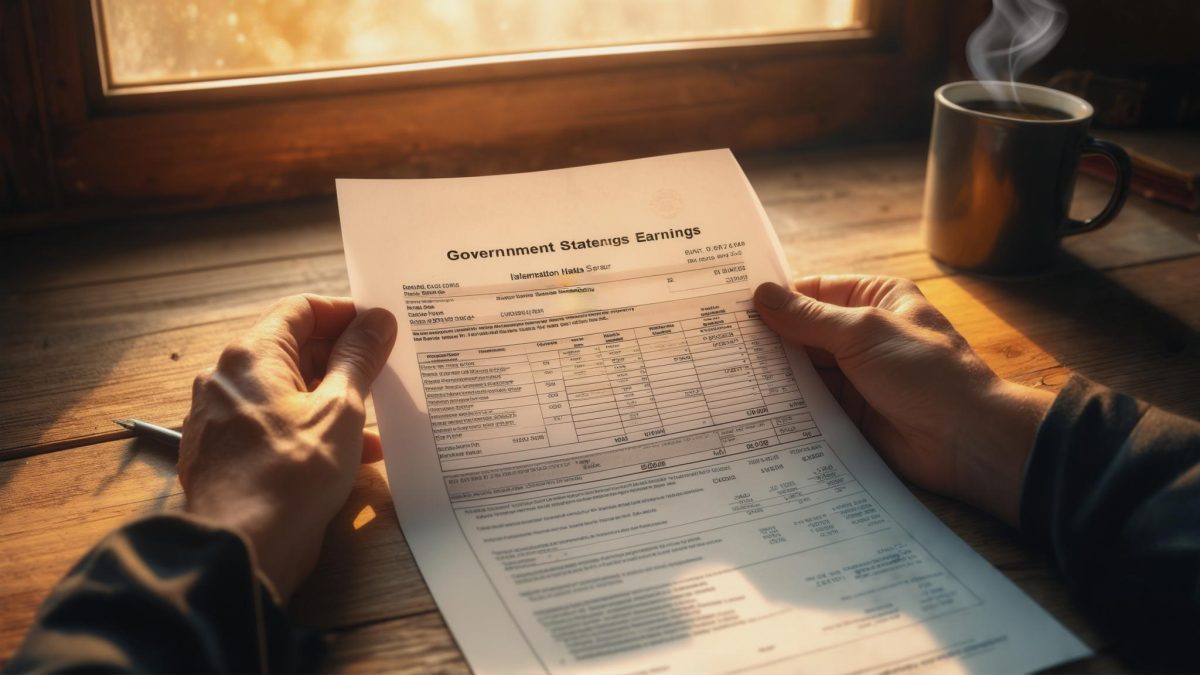
Right there at the clinic, with a volunteer tax preparer helping her log in through the SSA’s My Social Security portal, Dianne pulled up her earnings record for the first time. She had reported income in eight of the past ten years. Two years — 2017 and 2020 — showed near-zero earnings, one because a major client had dropped her, another because the early months of the pandemic wiped out her contract work entirely.
Her estimated retirement benefit, if she claimed at age 67 and continued earning at roughly her current level, was projected at approximately $1,410 per month in today’s dollars. If she waited until 70, that number climbed closer to $1,750. Neither figure, she acknowledged quietly, was enough to live on alone in Portland.
“I think I assumed Social Security would be more,” she told me. “I’ve been paying into it for years. I thought maybe it would be like — I don’t know, $2,500? $3,000? This is a reality check.”
Per the SSA’s official announcement, nearly 71 million beneficiaries received a 2.8% cost-of-living adjustment beginning in January 2026. That adjustment helps current retirees keep pace with inflation — but for someone like Dianne, who is decades from retirement, the benefit she ultimately receives will depend heavily on the earnings she reports between now and then.
The Gap Between What She Pays and What She Gets Back
This is the part of the conversation that Dianne found hardest to sit with. As a self-employed worker, she is responsible for paying both sides of the Social Security payroll tax — 6.2% as the “employee” and 6.2% as the “employer,” for a combined 12.4% on net self-employment earnings. On top of that, the Medicare portion adds another 2.9%. In a year when she earns $40,000 net, she’s sending roughly $5,652 to Social Security alone.
That frustration is understandable, but the record she’s building is real. Social Security calculates retirement benefits using a worker’s 35 highest-earning years. For Dianne, who has only about ten years of earnings history so far, those two zero-income years in 2017 and 2020 are currently dragging her average down. Every additional year of reported income — especially stronger-earning years — has the potential to raise her eventual benefit.
As the National Council on Aging explains, the timing of when you claim benefits also shapes the monthly amount significantly. Claiming at 62 permanently reduces your benefit compared to waiting until your full retirement age (67 for those born after 1960). Waiting until 70 earns delayed retirement credits that can increase the monthly payment by up to 24%.
Health Insurance: The More Immediate Fear
Retirement felt abstract to Dianne at 39. Health insurance did not. She had been uninsured for eight months in 2023 after a rate increase pushed her Marketplace plan beyond what she could absorb during a slow stretch. “I just didn’t go to the doctor,” she said. “I hoped nothing happened.” Nothing did — but the anxiety of that period never fully left her.
Medicare, she knew, was something she wouldn’t be eligible for until 65. That’s 26 years away. In the meantime, she was navigating premium tax credits through the ACA Marketplace, a process she found confusing given that her income fluctuated month to month. Estimating annual income for subsidy purposes — and then reconciling it at tax time — had already triggered a $340 repayment in 2024 when she earned more than projected.
She was also unaware that Social Security and Medicare are intertwined in ways that matter even before you claim benefits. The Medicare tax — 1.45% on all net self-employment earnings, paid on both the employee and employer side — is being collected from her now. Those contributions don’t build a benefit she can see on a statement, but they do establish her eligibility for Medicare at 65 based on her work history.
Where She Stands Now, and What She’s Decided
By the time Dianne’s tax appointment wrapped up, she had a clearer picture of her Social Security earnings record than she’d ever had. She had also confirmed that she was on track to hit 40 credits — full eligibility — within the next two years if her income stayed relatively stable. That was, she admitted, something of a relief.
The harder reckoning was accepting that Social Security alone would not be enough. “I always kind of figured it would cover the basics when I got old,” she said. “Now I see it’s more like — it’ll cover some of the basics. And I have to figure out the rest myself.”
She wasn’t leaving with a plan — she was careful to say that. She had a better map of the terrain, but figuring out what to do next was something she’d need to work through on her own or with someone she could trust. “I don’t want anyone telling me what to do with my money,” she said, with that same measured wariness she’d shown at the start. “I just want to understand what I’m dealing with.”
That, I thought walking back to my car through the January drizzle, is the most honest thing a person can say. Dianne McBride had spent a decade building something she couldn’t see. Now she could see it. What she does with that visibility is entirely her own.
According to NewsNation’s coverage of 2026 Social Security changes, several significant adjustments took effect this year — including the 2.8% COLA and updated SSDI thresholds — that affect how millions of workers and beneficiaries interact with the system. For people like Dianne, who are decades away from collecting, those annual shifts are easy to tune out. The harder work is making the system feel real before it matters urgently.
Related: Her Co-Signed Loan Went Bad, Her Business Stalled, and Then Medicare Ate Her Social Security Raise




Leave a Reply