

Most financial planners will tell you that life insurance is the first line of defense when one partner is the sole breadwinner. But a quieter assumption lives underneath that advice — that Social Security will catch whatever falls through the cracks. That assumption, I’ve found, is doing a lot of heavy lifting for millions of American families, and it doesn’t always hold.
When I sat down with Grace Nakamura in a Northeast Portland coffee shop last February, she ordered an oat milk latte and opened with something that stuck with me. “We’re not irresponsible people,” she said, folding her hands around the mug. “We just made choices that felt right for our lives. I’m only now realizing choices have costs.”
Grace is 38, a part-time yoga instructor and wellness blogger who left a corporate HR role several years ago to pursue what she calls “work that actually means something.” Her partner, Daniel, is an operations director who earns approximately $140,000 a year. Their daughter, Maya, is six. Grace brings in roughly $18,000 annually from classes and her blog. They have no life insurance, no disability coverage, and no will.
The Assumption That Went Unexamined
Grace told me she had always carried a vague sense that the government would step in if something catastrophic happened. “I knew Social Security existed. I knew it wasn’t just for old people. But I never once sat down and looked at what it would actually pay.” That kind of background confidence is common — and it often goes unchallenged for years.
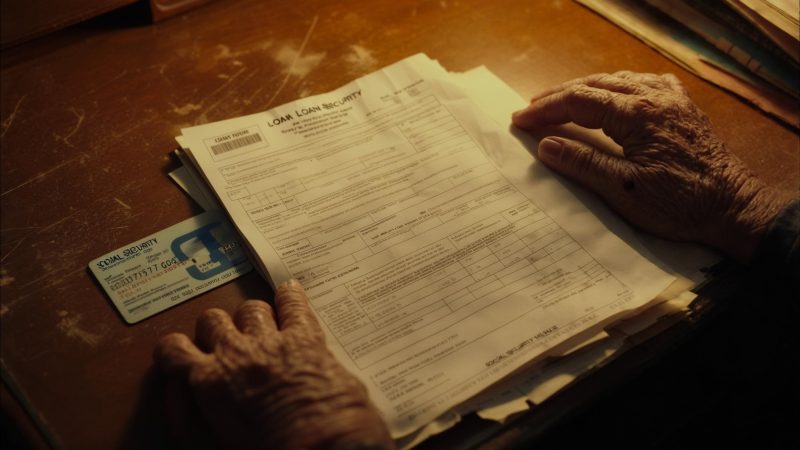
According to the Social Security Administration, survivor benefits are available to the children and spouses of deceased workers who paid into the system. A child under 18 can receive up to 75% of the deceased parent’s basic Social Security benefit amount. A surviving spouse who is caring for that child — and who is under age 60 — can also receive 75% of the deceased’s benefit, sometimes called the “mother’s or father’s benefit.”
On paper, that sounds like a meaningful cushion. The complication is in how that base benefit is calculated. It depends entirely on the deceased worker’s lifetime earnings record — specifically, their Primary Insurance Amount (PIA), which is what they would have received at full retirement age.
Daniel’s years at $140,000 would likely generate a meaningful PIA — but because survivor benefits are also subject to a family maximum (typically between 150% and 180% of the worker’s PIA), the combined payment to Grace and Maya could still fall well short of what the family currently spends to live in Portland. And that’s assuming Daniel dies, not becomes disabled — a separate and equally important scenario.
The Disability Gap Nobody Mentions
When I shifted the conversation to disability, Grace went quiet for a moment. “I genuinely hadn’t thought about that separately,” she admitted. “I was already overwhelmed thinking about the death thing. Disability felt like a different category.”
It is a different category — and in some ways a more likely one. According to the SSA’s disability program overview, Social Security Disability Insurance (SSDI) requires workers to have earned sufficient “work credits” — generally 40 credits, with 20 earned in the last 10 years, though younger workers need fewer. Daniel almost certainly qualifies. Grace, with her part-time income and career break, may not — at least not yet.
If Daniel were to become seriously disabled, SSDI benefits — based on his earnings record — would likely replace only a portion of his current income. The SSA estimates that the average SSDI benefit in early 2025 was approximately $1,537 per month. Against a Portland mortgage and a child in school, that number is stark.
Grace’s own SSDI eligibility is murkier. At $18,000 per year, she earns enough to accumulate work credits (one credit per $1,730 earned in 2025, up to four credits per year), but her gap years from leaving HR may reduce her total. “I never thought of my yoga teaching as a career in the Social Security sense,” she told me. “I thought of it as my life.”
A Philosophical Disagreement With Very Real Consequences
Grace and Daniel don’t argue about money in the conventional sense. They argue about what money means. She described their dynamic with a kind of tired precision that suggested it was a well-worn conversation. “Daniel is a planner. He wants spreadsheets. I think obsessing over what might go wrong pulls you out of actually living. We’ve been going in circles on the life insurance thing for two years.”
That circular disagreement has a dollar value attached to it. Term life insurance for a healthy 38 or 40-year-old in good standing can cost roughly $30 to $60 per month for a $500,000 policy — a cost that would have been manageable on Daniel’s salary at almost any point in the last several years. The delay hasn’t been financial. It’s been philosophical.
As Grace explained it, she doesn’t want to be someone who lives in fear. But sitting with the table I’d sketched out during our conversation, she said something that landed differently than her earlier reassurances. “I keep telling myself we’ll deal with it. But ‘we’ll deal with it’ assumes there’s a ‘we’ still around to deal.”
What the Numbers Actually Mean for Maya
The part of the conversation that shifted Grace most visibly was about their daughter. Maya is six, which means that if Daniel were to die today, she would be eligible for Social Security survivor benefits until she turns 18 — potentially 19 if still in high school. Grace, as her caregiver, could receive the mother’s benefit until Maya turns 16.
That sounds like meaningful protection. But the math is complicated by what Portland actually costs. Median rent for a two-bedroom apartment in the city runs well above $2,000 per month in 2026. The combined survivor benefit for Grace and Maya — even assuming Daniel’s PIA reflects his solid earnings — would likely cover housing and basic expenses but leave little margin for emergencies, childcare, or Grace’s own retirement contributions.
“When you lay it out like that,” Grace told me near the end of our conversation, “it’s not that Social Security is useless. It’s that I was treating it like a complete answer when it’s really just a floor.” She paused, then added: “A floor that might not reach high enough for where we live.”
Where Grace Stands Now — And What Remains Unresolved
When I followed up with Grace about six weeks after our initial meeting, she told me she and Daniel had finally logged into the SSA’s my Social Security portal together. It was, she said, the first financial conversation they’d had in years that didn’t end in disagreement. “Seeing the actual numbers made it less abstract. Daniel cried a little, which surprised us both.”
They haven’t yet purchased life insurance or drafted a will. The philosophical disagreements haven’t dissolved — they’ve just softened slightly under the weight of specific numbers. Grace is still processing what dependency means, both emotionally and structurally. She told me she’s started teaching an extra class on Saturday mornings, partly because she likes it, and partly because she wants to keep accumulating Social Security credits under her own name.
That last detail struck me as the most honest thing she said. Not a resolution, not a plan, but a quiet acknowledgment that the system she’d assumed would protect her family requires something from her too — and that she’d spent years not giving it.
Grace Nakamura isn’t a cautionary tale, exactly. She’s someone who made a set of values-driven choices and is now doing the harder work of understanding what those choices cost. The Social Security system has rules, timelines, and formulas that don’t bend for philosophy. For families where one income does the heavy lifting, that gap between assumption and reality can be measured in thousands of dollars a month — and it’s often invisible until someone sits down and looks.


Leave a Reply