
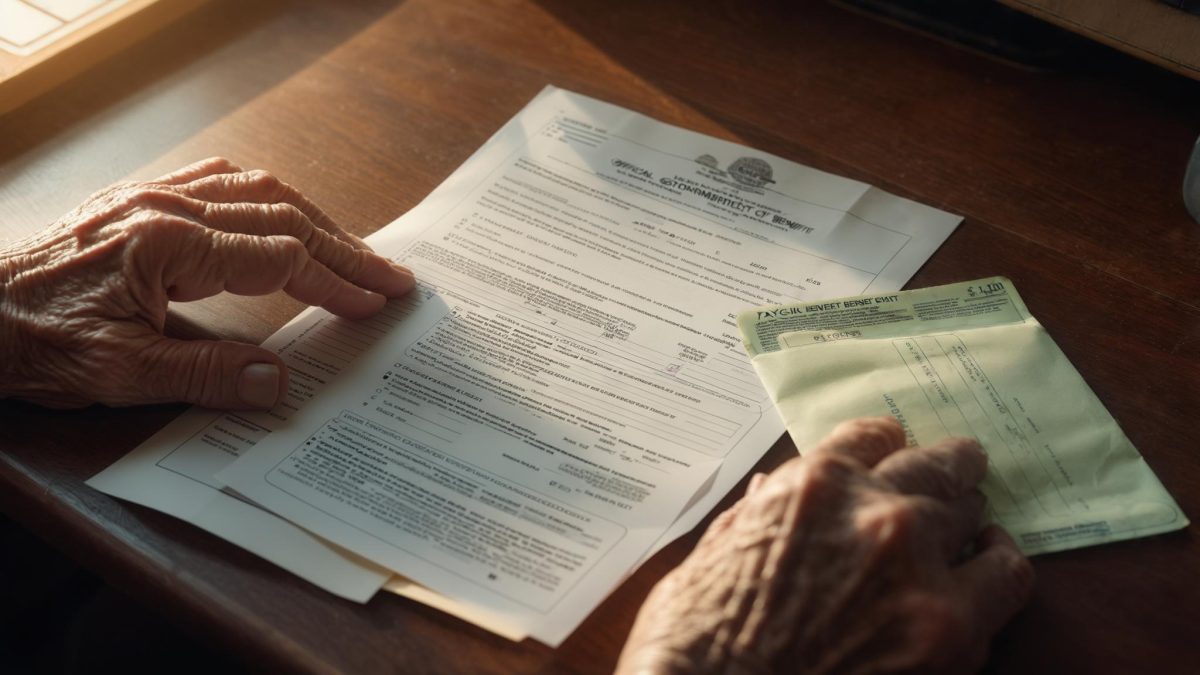
My neighbor Carol retired from her nursing position at 62, started collecting Social Security, and then took a part-time hospital job six months later to stay busy and cover expenses. By April, her monthly deposit had dropped by nearly $300. She called the Social Security Administration twice, convinced there had been an error. There was no error. There was just a rule she had never been told about.
Carol’s situation is not unusual. According to the Social Security Administration, roughly 1 in 5 new beneficiaries claims benefits before reaching full retirement age — and a significant portion of them continue earning income from work. Most have no idea that doing so can trigger an automatic benefit reduction.
The Common Belief: You Can Work and Collect at the Same Time, No Problem
The appeal of early claiming is real and understandable. You’ve paid into Social Security for decades. The money is yours. You’ve earned it. Claiming at 62 feels like a practical decision — especially if you’re dealing with health concerns, caregiving demands, or a job you simply want to leave behind.
The general assumption, shared by a surprising number of pre-retirees, is that Social Security benefits and employment income are completely independent. You can earn as much as you want from a job, and your benefit check arrives in full on the same schedule regardless. Financial advisors hear this assumption constantly. So do SSA representatives. It is repeated at kitchen tables and retirement seminars across the country.
The belief that work income and benefit income never interact is simply not accurate — at least not before you reach full retirement age (FRA), which is currently 67 for anyone born in 1960 or later.
The Crack in the Story: Why Some Checks Come Up Short
The first sign something is wrong usually arrives not as a letter but as a smaller direct deposit. A beneficiary who was receiving $1,450 per month logs into their bank account and sees $1,180 instead. Sometimes the SSA sends advance notification; sometimes the adjustment happens and the paperwork follows weeks later.
What triggers this is the Social Security earnings test, a provision built into the program since its earliest decades. The rule exists because Social Security was originally designed as a retirement program — intended to replace income you were no longer earning. The logic, however dated it may feel in 2026, was that if you’re still earning substantial wages, you don’t yet need the full benefit.
Here is how the math works at the 2025 thresholds, which serve as a reliable baseline: if you are under full retirement age for the entire year and your earnings exceed $22,320, the SSA withholds $1 in benefits for every $2 you earn above that limit. In the calendar year you actually reach FRA, the threshold rises sharply to $59,520, and the withholding rate drops to $1 for every $3 earned above the limit. Once you hit FRA, the earnings test disappears entirely — you can earn any amount without affecting your benefit.
Why This Catches People Off Guard: The Evidence Behind the Confusion
The SSA does publish information about the earnings test on its website, and the rules are included in the benefit award letter sent when you first enroll. The problem is that the letter arrives during an already overwhelming transition — paperwork, Medicare enrollment, employer separation forms — and the earnings test language is not prominently featured.
A 2023 survey by the National Academy of Social Insurance found that a majority of respondents near retirement age were unaware that earning income while collecting early benefits could reduce their monthly check. Awareness dropped further among people without college degrees and among those who did not use a financial advisor during the claiming process.
Part of what compounds the confusion is timing. The SSA often processes earnings test adjustments based on tax return data from the prior year, meaning the withholding can kick in months after the income was earned. A beneficiary who worked heavily in the second half of one year might not see the impact on their checks until well into the next. This lag makes the cause-and-effect relationship far less obvious.
The Real Truth: The Money Isn’t Gone — But the Timing Still Matters
Here is what most people don’t hear after the initial shock: withheld benefits are not lost permanently. When you reach full retirement age, the SSA recalculates your monthly benefit upward to credit you for the months during which benefits were fully or partially withheld. According to the SSA’s own guidance on benefit recalculation, this adjustment is applied automatically — you don’t need to file any additional paperwork.
The recalculation works by treating each withheld month as a month you did not actually receive benefits. Since claiming later always produces a higher monthly amount, those withheld months effectively push your adjusted benefit slightly upward when FRA arrives.
That said, the recovery is gradual. If the SSA withheld $4,800 over two years due to your work income, and your adjusted benefit rises by $40 per month at FRA, you’d need ten years of collecting at the higher rate to fully recoup that amount. For someone in their mid-60s dealing with health concerns, that break-even horizon is not guaranteed.
There is also a cash-flow reality that the long-term math doesn’t fully capture. Many people who claim early and continue working do so because they need the income now — not in a decade. Having $400 less per month in 2026 because of withheld benefits affects rent, prescriptions, and grocery bills today, regardless of what a recalculation promises in 2031.
What This Means for Your Claiming Decision
The earnings test doesn’t mean claiming early is always wrong. It means claiming early while planning to continue significant work income is a combination worth modeling carefully before you commit to it. Once you file for Social Security, reversing that decision is possible but limited: you can withdraw your application within 12 months and repay all benefits received, or you can suspend benefits at FRA to earn delayed credits. Both options come with constraints.
Carol, my neighbor, eventually sorted through the paperwork and understood what had happened to her checks. She reduced her hours at the hospital to keep her earnings just under the annual limit, and her full monthly benefit was restored. She told me she wished someone had walked her through a single page of plain-language facts before she signed anything at the SSA office. That page exists — it’s just rarely handed out unprompted.
The earnings test is not a penalty, exactly. It’s a deferral. But deferrals cost you something real in the near term, and for people living on fixed incomes, the near term is the only term that pays the bills. Knowing the rule before you claim — not after your first reduced deposit — is the only way to make a decision that actually fits your life.
Related: Claiming Social Security at 62 Feels Smart Until You See What It Actually Costs You Over 20 Years




Leave a Reply