
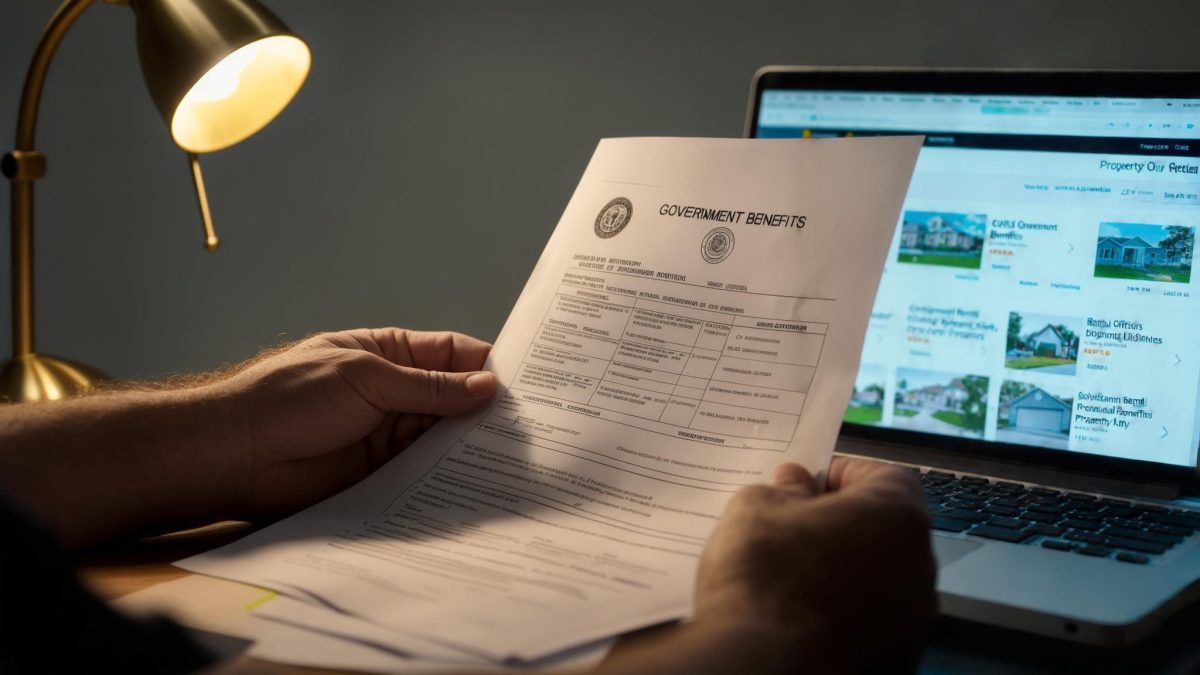
The assumption that a high income automatically guarantees a strong Social Security benefit may be the costliest myth circulating among America’s professional class. Many six-figure earners spend decades building wealth — on paper — without ever looking closely at the one government retirement account they cannot borrow against, refinance, or leverage.
I met James Okonkwo on a Tuesday afternoon at a coffee shop near the Galleria in Houston. He arrived in a pressed Oxford shirt, slightly distracted, glancing at his phone before putting it face-down on the table. He had agreed to talk to me after reading one of my earlier pieces on Social Security earnings records. He wanted, he said, to tell me something he hadn’t told anyone else — including his wife.
The Life He Built From Zero
James came to the United States from Lagos, Nigeria at nineteen years old with, by his own account, almost nothing. He worked part-time jobs while earning an engineering degree in Texas, entered the oil and gas industry in his mid-twenties, and watched his career accelerate in ways he could not have predicted.
“I went from making $52,000 my first year as an engineer to clearing $195,000 within five years,” James told me. “In Nigeria, that kind of money is generational wealth. I thought I had made it. I thought I was done worrying.”
He bought a large home in Katy, Texas. Then two investment properties — one in Houston’s Heights neighborhood, one in the suburbs — with the intention of building passive income. He sent $800 every month to his mother and extended family in Lagos, which he described not as a burden but as a non-negotiable obligation. By 2023, he owed roughly $1.2 million across the three mortgages.
When the Oil Market Shifted Everything
In late 2024, his firm cut hours companywide in response to declining oil prices. James’s contract income dropped by roughly a third. The rental market in Houston softened at the same time, and one of his investment properties sat vacant for nearly three months. For the first time in years, he felt a real gap between what was coming in and what was going out.
“I had always told myself the properties were the backup plan,” he said. “The plan behind the plan. But when everything dips at the same time, there is no backup. You are just exposed.”
It was during this period that James logged into the Social Security Administration’s my Social Security portal for the first time. He expected to see a reflection of two decades of strong earnings. What he found was more complicated.
What the Statement Actually Showed
James pulled up the statement on his phone at the table and showed it to me. His projected benefit at full retirement age — 67 for someone born in 1985, per SSA’s retirement age chart — came to approximately $2,340 per month in today’s dollars. He had expected something closer to $3,500.
The gap came from several places. His early working years in the U.S. — part-time jobs and low-wage positions between ages 19 and 24 — registered as near-zero earnings on his record, dragging down the 35-year average. A period spent on a temporary overseas assignment also left years with limited U.S. wages reported to SSA.
There was something else he discovered during that call with SSA, and it stung more than the zeroed-out early years.
The Rental Income Problem Nobody Warned Him About
James had assumed his rental properties were contributing to his financial future in multiple ways — building equity, generating monthly cash flow, and perhaps strengthening his Social Security foundation. A benefits specialist at SSA corrected that assumption directly.
Rental income reported on Schedule E of a federal tax return is generally classified as passive income. According to the Social Security Administration, passive rental income is not subject to Social Security or Medicare payroll taxes, which means it generates zero Social Security credits. Only earned income — wages, salaries, or active self-employment income subject to FICA or self-employment tax — counts toward a person’s benefit calculation.
“I had two properties generating maybe $3,800 a month combined in good months,” James told me. “I thought all of that income was working for me in some way. It was not. None of it counts for Social Security. That was the part that really hit me.”
He sat back in his chair when he said it. Not with anger, but with the particular stillness of a person recalibrating something he thought he understood completely.
The Conversation He Hasn’t Had at Home
When I asked James whether his wife knew the full picture, he was quiet for a moment. They have two children, ages eight and eleven. She manages the household. She does not know the exact balance on the mortgages, he said, or that one rental sat empty for three months last winter.
“I built something. I am proud of that. But I built it fast, and now I am the one who has to hold it together,” he said. “I keep thinking I will fix it before she has to worry about it. That is probably not the right way to think, but it is where I am.”
There was no resolution in his voice. Just the weight of carrying something alone for too long.
A Reckoning, Not a Resolution
James Okonkwo’s story does not have a tidy ending. His vacant rental found a new tenant in January 2025. His hours have partially recovered. But the version of retirement he had sketched in his mind — stepping away at 62, comfortable, with the properties generating income beneath him like a safety net — is being revised in real time.
There is a particular kind of financial stress that high earners rarely discuss openly: the shame of having earned a great deal and still feeling precarious. James talked about it with a candor that seemed to surprise even him toward the end of our conversation.
He is still working, still sending $800 a month to Lagos, still carrying three mortgages. He is 41. His full retirement age is 26 years away, which means he has meaningful time to add to his earnings record and change what that SSA projection eventually says. But the assumptions he carried for two decades — that a high salary meant a secure retirement, that rental properties were quietly building something — have been replaced by something more complicated and more honest.
“I came here with nothing,” he said, gathering his keys to leave. “I keep thinking that means I am ahead. But I have to be honest with myself about what I actually have.” He paused at the door. “I’m working on it.”
Whether he gets ahead of it remains an open question. But the first step — logging into that SSA portal, sitting with what the statement actually said — was real. And for many people in his position, it is the step they never take at all.
Related: Claiming Social Security at 62 Feels Smart Until You See What It Actually Costs You Over 20 Years




Leave a Reply