
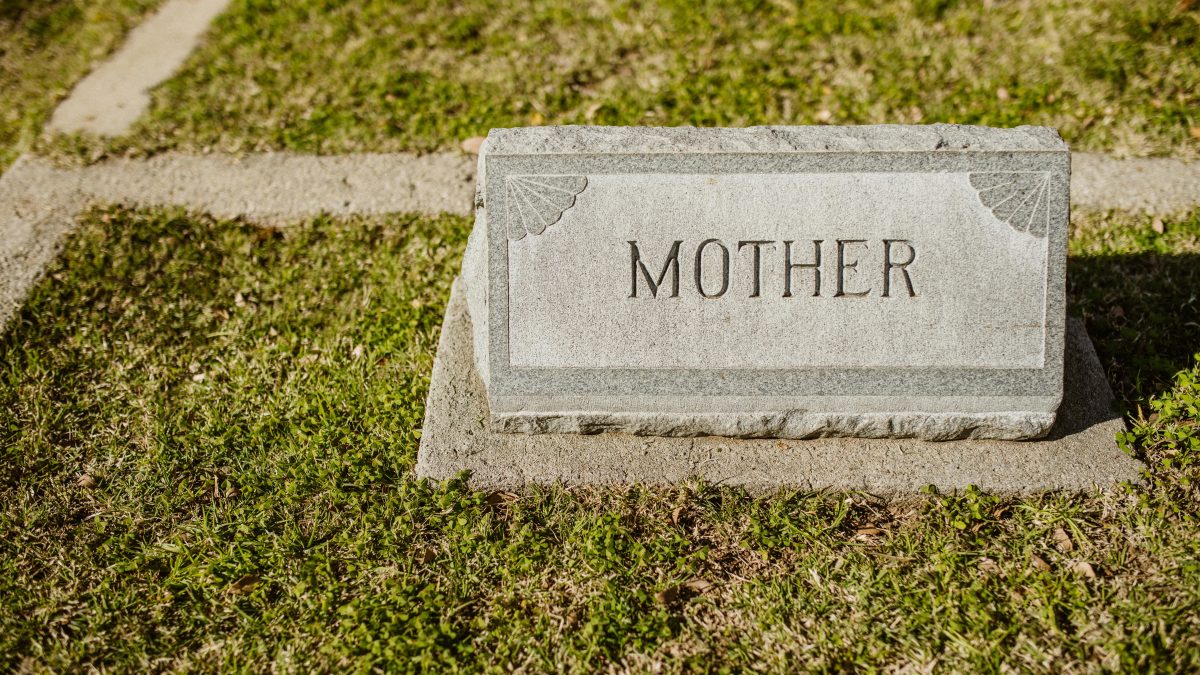
Roughly 4 million children in the United States receive Social Security benefits every month, according to SSA Fast Facts — many of them because a parent died or became permanently disabled, according to ssa.gov. What advocates who work with low-income families consistently report is that a meaningful share of eligible children never file a claim at all, because the parent raising them simply did not know they could.
When I sat down with Samantha Reeves in a corner booth at a coffee shop near Denver Health Medical Center, she had just finished a 12-hour overnight shift. Her scrubs were still on. She ordered black coffee and had the look of someone who had been running on four-hour nights for longer than she cared to admit.
Samantha is 31, a registered nurse at a community hospital in Denver, and the sole provider for her four-year-old daughter, Lily. Her ex-partner — Lily’s father — disappeared in February 2024. For more than a year after that, she carried everything alone: a $1,400-a-month daycare bill, $38,000 in nursing school loans, rent that nearly matched the daycare cost, and a rotating schedule of overtime shifts she picks up not because she wants to, but because the numbers do not add up without them.
The Weight of Doing It Alone
Samantha told me the financial math became unsustainable almost immediately after her ex-partner left. Denver’s cost of living had been climbing for years, and a single nursing income — respectable by most measures — buckled under the combined pressure of childcare, debt, and rent.
“Every month I’d sit down and just stare at the numbers,” she said. “Daycare was basically a second rent. And my loans weren’t going anywhere. I kept telling myself it would get easier, but it never really did.”
She began picking up overnight shifts on weekends, sometimes working close to 60-hour weeks. She told me she is fully aware of the burnout risk — she watches it develop in colleagues who have been doing the same thing for five years — but she could not identify an alternative. Her parents live in New Mexico. Her ex’s family had cut off contact. There was no safety net beneath her.
In the summer of 2024, police notified Samantha that her ex-partner had been found deceased in another state. He had worked for roughly nine years across various jobs before disappearing — enough, it would turn out, to have built up a meaningful Social Security earnings record. That fact did not become relevant to Samantha for several more months.
The Question That Changed the Calculation
The turning point, Samantha told me, came in November 2024 during a conversation with a social worker at her hospital. The social worker had been visiting the unit to discuss financial hardship resources available to staff — a program Samantha described as well-intentioned but one she had never thought applied to someone in her position.
“I almost didn’t stop to talk to her,” Samantha told me. “I thought those resources were for people in a different kind of situation. I make decent money. I just assumed I was bad at managing it.”
The social worker worked through a series of questions about Samantha’s household. When Samantha mentioned that Lily’s father had passed away earlier that year, the social worker paused and asked a single direct question: had Samantha contacted the Social Security Administration about survivor benefits for Lily?
Samantha had not. The thought had genuinely never occurred to her.
How the Survivor Benefit System Actually Works
For Lily, the calculation depended entirely on how much her father had earned and reported to Social Security over his working years. Samantha said the hospital social worker helped her understand which documents she would need and walked her through the initial filing process. The SSA appointment itself took place at a local field office in late November 2024.
Samantha filed in late November 2024. The SSA processed the claim over the following weeks, and by February 2025 — almost exactly one year after her ex-partner had first disappeared — Lily’s survivor benefit was approved.
The Numbers, Finally in Her Favor
Lily’s approved monthly benefit came to $834. Because Samantha had been eligible to file for several months before she actually did, the SSA issued back pay covering approximately four months of retroactive benefits — a lump sum of roughly $3,336, deposited alongside the first regular payment in February 2025.
Samantha told me she sat in her car after seeing the deposit confirmation and cried. Not quite from relief, but from something more complicated — a mix of gratitude and a slow-building frustration that this money had existed all along while she was burning through her nights.
The benefit is paid to Samantha as Lily’s representative payee — the adult legally responsible for managing and documenting how the funds are used on the child’s behalf. The SSA requires representative payees to use the money for the child’s current needs and maintain spending records. Samantha said she applies it exclusively to Lily’s childcare costs.
The benefit will continue until Lily turns 18, with a possible extension to 19 if she remains enrolled as a full-time high school student at that point. Samantha said she tries not to project that far ahead. What she focuses on is that she now has a floor — something she did not have before November 2024.
What Samantha Wishes Someone Had Said Sooner
When I asked what she would tell another sole provider in a similar position, Samantha paused before answering. She was careful to say she is not a financial advisor and does not tell people what decisions to make — but she wished the information itself had been more visible to her when she needed it.
“I spent a year and a half burning myself out, and this benefit existed the whole time,” she told me. “I don’t think most people know about it. I didn’t. And I’m an educated person with a decent job. If I missed it, I think a lot of people are missing it.”
She mentioned that her hospital has since expanded its staff resource sessions and now explicitly includes Social Security survivor and dependent benefits as topics employees should investigate in relevant life circumstances. She said she advocated for that change herself after going through the process.
There are real limits to what the benefit has altered. Her student loans are still $38,000. Denver has not gotten cheaper. She still picks up extra shifts, just fewer of them. She told me she worries about what happens when Lily starts elementary school and the childcare equation shifts again.
Samantha is 31. Lily is four. The benefit will likely continue for another 14 years, barring changes in Lily’s circumstances or significant shifts in SSA policy — neither of which Samantha can control. What she can control is whether she uses the floor that now exists beneath her.
As I drove home from that coffee shop in Denver, I kept thinking about how many people like Samantha there must be — sole providers who assume benefits like this are intended for someone else, someone in a different kind of situation, someone who needs it more. The SSA’s own data indicates approximately 4 million children currently receive some form of Social Security benefit. How many eligible children fall outside that number, unclaimed and unknown, is a harder question to answer — and a harder one to let go.
Related: I almost didn’t apply for SNAP after losing my job because I assumed I wouldn’t qualify — that decision nearly cost me $835 a month in benefits
Related: The Medicare Deduction That Quietly Shrinks Your Social Security Check Every Single Month (firstpersonfinance.com)




Leave a Reply